Category: electrical-services
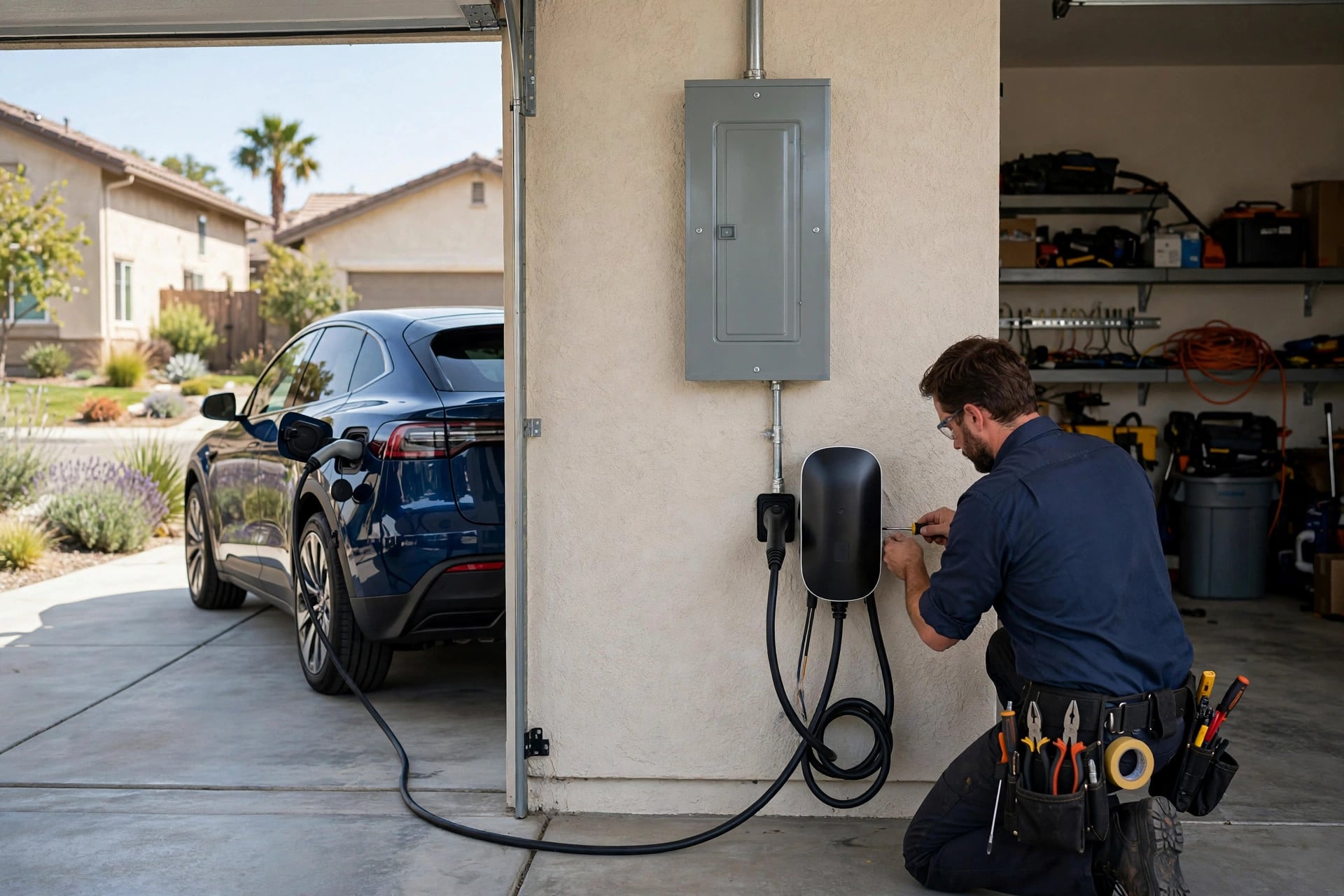
Charging at home changes how an electric vehicle fits into daily life. Instead of planning trips around a public charger, Lakewood homeowners can plug in at night and leave in the morning with a full battery. A proper EV charger installation makes that routine safe and reliable, but it is more than mounting a unit on a garage wall. The charger draws a lot of power for hours at a time, so your panel, wiring, and permits all need attention first.
Level 1 vs. Level 2 Charging at Home
Most EVs include a Level 1 cord that plugs into a standard outlet. It works, but it adds only a few miles of range per hour, which is not enough for many commuters driving from Lakewood into Los Angeles or Orange County each day. A Level 2 charger uses a dedicated 240-volt circuit, the same kind of power an electric dryer uses, and charges several times faster. For most households, Level 2 is the setup worth installing, and it is the one that requires a licensed electrician.
Start With Your Electrical Panel
The first question is not which charger to buy. It is whether your existing panel can support it. Many Lakewood homes were built in the 1950s and 1960s, and some still run on smaller or older panels that are already close to capacity with air conditioning, a dryer, and modern appliances. Adding a charger without checking can mean tripped breakers or an overloaded panel. We perform a load calculation before any work starts. If your panel is full or undersized, a panel upgrade may be needed first, and we will explain that plainly before you commit to anything. Homeowners searching for a licensed electrician near me are usually looking for exactly that kind of honest assessment.
Where the Charger Should Go
Placement affects both convenience and cost. A charger mounted in the garage, close to where the car parks and close to the panel, is usually the simplest install. Longer wiring runs, trenching to a detached garage, or mounting on an exterior wall all add labor and materials. Think about how you actually park, which side the charge port is on, and whether a second EV is likely in the next few years. Planning for a second circuit now, while walls are open and a permit is already pulled, is far cheaper than starting over later.
Permits and Code in Lakewood
Home charging equipment must be installed to code and, in most cases, permitted and inspected. That protects you if you ever sell the home, file an insurance claim, or need warranty work on the charger. A permitted install means the circuit size, breaker, wiring method, and disconnect requirements were all checked against current standards. We handle the permit process as part of our electrical services work, so you are not left figuring out city paperwork on your own. Rules and inspection steps can vary, so working with a contractor who installs chargers regularly in California keeps the process moving.
What Drives the Cost of an Install
We do not quote a home charger job from a generic price list, because the factors vary too much from house to house. Panel capacity is the biggest one: a home with open breaker space and a panel in the garage is a very different job from a home that needs a 200-amp upgrade. Distance from the panel to the charger, wall materials, attic or crawl-space access, and the amperage of the charger you choose all affect the final scope. Permit fees and any needed trenching or conduit work factor in as well. What we can promise is a clear written explanation of what your home needs and why, before work begins, so the ev charger installation cost never comes as a surprise halfway through the job.
Smart Chargers and Scheduling
Many Level 2 chargers offer scheduling, energy tracking, and app control. Scheduling charging for off-peak hours can lower what you pay to charge, and it is easier on the grid during hot California afternoons when air conditioners are running hard. Some chargers can also share a circuit between two vehicles, which is worth considering for two-EV households with limited panel capacity. We can walk you through which features are genuinely useful for your driving habits and which ones you can skip.
Why This Is Not a DIY Job
A charger circuit runs at high load for long stretches, often overnight while everyone is asleep. Undersized wiring, a loose connection, or the wrong breaker may not fail right away, but it can overheat over time. This is steady, heavy electrical work, not a weekend outlet swap. A licensed electrician will size the circuit correctly, torque and test the connections, label the panel, and make sure the installation passes inspection.
If you are ready to charge at home in Lakewood, Mars HVAC & Electric can check your panel, recommend the right charger setup, handle the permit, and install it safely. Call us today at 310.880.9718 to schedule your EV charger installation and start every morning with a full charge.

0 Comments